Can we eradicate poverty? YES

Screen Shot 2020-10-18 at 10.12.31 am.png

In an era with the most incredible technology, knowledge, economic development and financial resources we believe that poverty is a moral outrage.

Poverty is not solely an economic issue, but rather a multidimensional phenomenon that encompasses a lack of both income and the basic capabilities for people to be able to live in dignity.

Some facts

In Australia, 13.6% of the population, or 3.24 million people, live below the poverty line.  This includes 17.7% of all children in Australia (about 800 000 children under the age of 15). More than one in eight adults and one in six children live below the poverty line in Australia.

In the United States, 11.8% of the population, or 38.1 million people, live in poverty.

In India, 4% of the population or 53 million, live in extreme poverty on less than $2AUS a day. These people have limited or no access to social benefits or services.

Possibly, the country presently most impacted by poverty is Nigeria, with an overall population is about 191 million, the rate of extreme poverty is much higher – 44% are estimated to live in poverty.

Experts have identified that the eradication of poverty is possible

The World Bank projects that it is possible to end extreme poverty by 2030. However, this would take a heroic effort. Globally the number of people in poverty will have to decrease by 50 million each year. That is the equivalent of about a million people each week for the next 15 years.

Surely, this is our moral imperative.

The heroic efforts of Project Help India

Thanks to your support, our teams in Kotdwara, Bijnor and now in Punjab are working incredibly hard to help the poorest of the poor. We do this by responding to people’s immediate needs such as hunger, and perhaps even more importantly through our holistic programs These programs don’t just provide a healthy meal but aim to get to the root of the cause bringing generational impact and long-lasting change.

As well as a healthy meal we provide dignity and hope for the future.

Just in these past 7 days, Project Help India has…

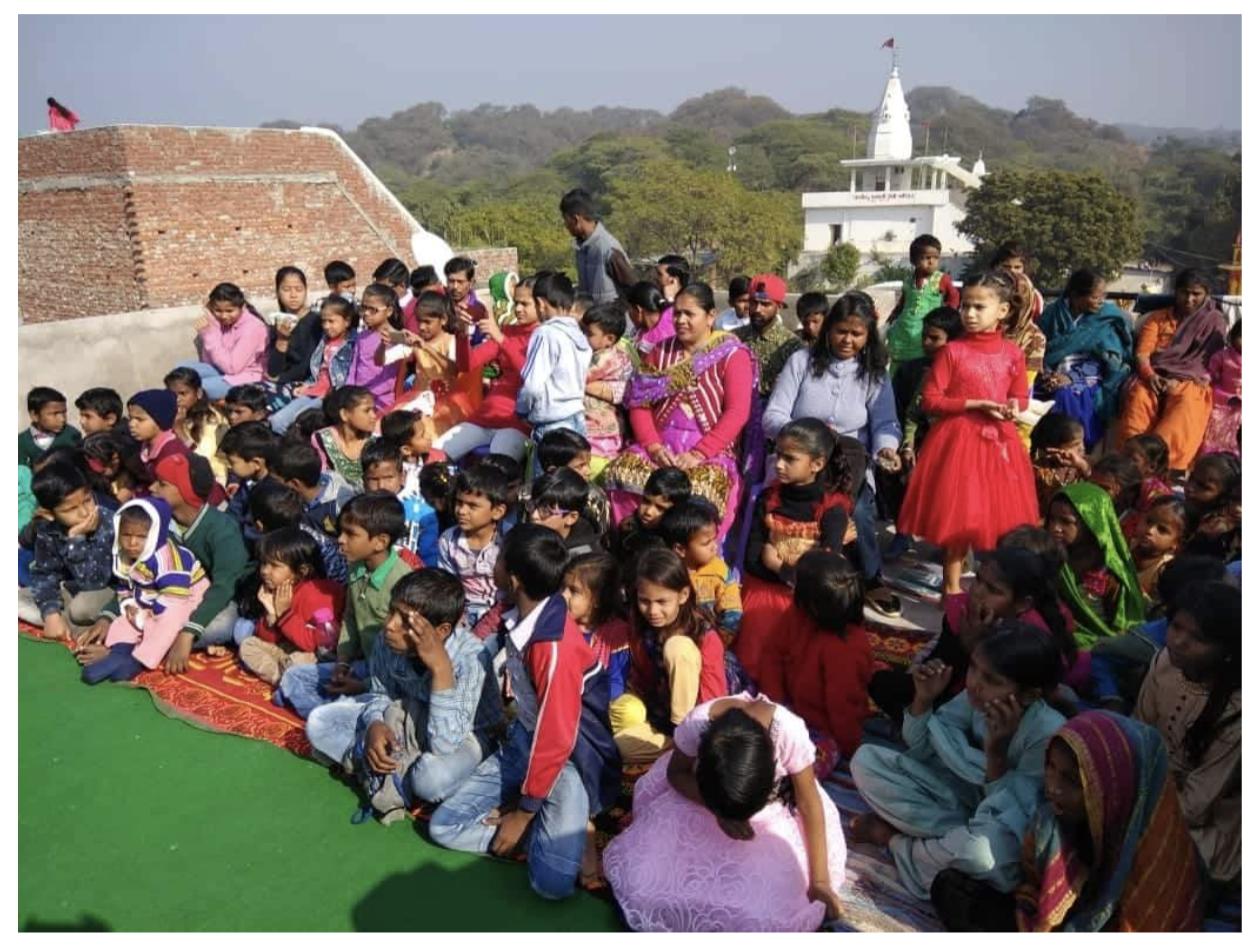
  • Educated and fed 450 children

  • For the United Nations ‘International Day of the Girl Child on 11th October, we raised awareness of the needs of girls and young women. Forty girls, aged 13 to 19 years attended a special seminar which focussed on the importance of them each receiving an education. This seminar was attended by local dignitaries, members of the police including Deputy Superintendant Mr Anil Joshi, and received attention in the local newspaper. See BLOG below.

  • We provided educational awareness through our World Food Day program on 16th October. See videos here and BLOG below.

  • We had some fun …celebrating Neelam’s Birthday. He honour Neelam, for her remarkable efforts teaching the children at our Bagnala Village Centre. Neelam has an inspiring story which shows how with courage and determination, the vicious cycle of poverty can be broken. We will share her story with you soon.

IF YOU ARE INTERESTED TO LEARN MORE ABOUT POVERTY

The World Poverty Clock provides a very interesting interactive website that helps you to look at poverty data that has been adjusted to include the impact of COVID-19. If you are a data geek, we highly recommend that you check this out.

World Food Day

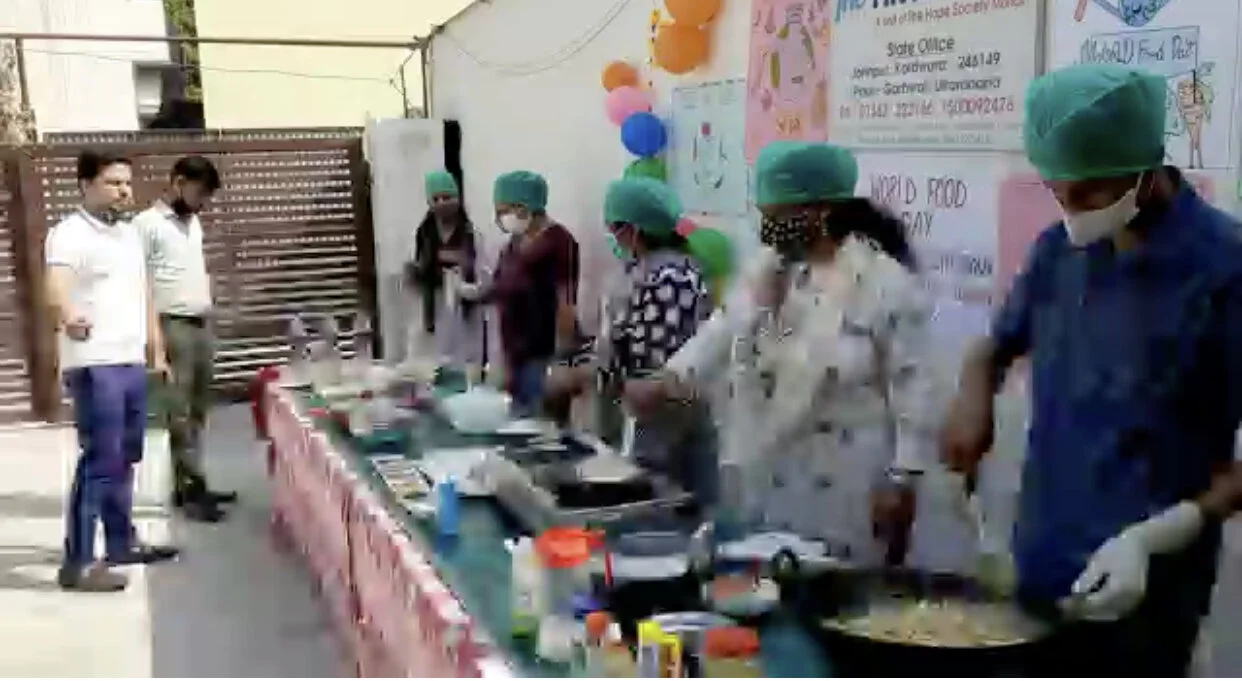
On 16th October we provided educational awareness through our World Food Day program. Our team participated in a cooking program where together they prepared healthy and delicious food. We prepared food packs, and gave nutrition lessons for the kids at our education centres. All food was organic and was carefully washed following COVID safety guidelines. The day was a lot of fun and also coincided with The 2020 United Nations International Day for the Eradication of Poverty.

The theme for World Food Day was;

Grow, Nourish, Sustain - promoting community awareness in our action for zero hunger. Go to OUR PROJECTS page to check out our You Tube clips on this wonderful day.

International Girl Child Day

PHOTO-2020-10-11-14-50-41.jpg

The United Nations International Day of the Girl Child focuses attention on the need to address the challenges girls face and to promote the empowerment of girls and young women.

On Sunday 11th October we had an amazing day with 40 girls, aged 13 to 19 years, attending a special seminar which focussed on the importance of them each receiving an education. This seminar was attended by local dignitaries, members of the police including Deputy Superintendent, the honourable Mr Anil Joshi. We received a mention in the local newspaper. We love the girls who we help …each has a bright and hopeful future.

Recognition and thanks given to ‘Project Help’ for empowering young girls in the community.

Recognition and thanks given to ‘Project Help’ for empowering young girls in the community.

Life and Learning September and October in pictures

Bagnala Village lessons with social distancing

Our new students at the HOPE Centre in Punjab

Kids at our Disability Centre in Kotdwara

A tree plantation drive was  organised by Project Help at our jungle centres for the students to create awareness and spread the message of saving our planet.

Senior students bring COVID awareness to the marketplace

LINK to video cam on the streets of Kotdwara

Some lesson planning from our teacher registers

It's all for the love of these kids

This past month at Project Help India has been filled with purpose, busyness, satisfaction, and reward but with this much heartache as we observe the conditions that our students live in due to the challenges of a life of poverty, impacted by COVID-19. Take twelve year old Anisha, and her brother and sister for example.

Anisha (12 years), her brother Naveen (10 years) and little sister Aakriti (aged 8) come to school despite the terrible circumstances of their lives. All three kids are sick, hungry, malnourished and need urgent help.

Anisha lives in Village Parmawala and she attends our school (small centre) there. She lives with her two younger siblings, Naveen and Aakriti. We love these kids. They truly are remarkable given the circumstances of their lives. They diligently come to school to learn and they take their studies seriously. Their education is their only hope for a better future. School is a haven, providing a place of security and belonging. Their teacher ensures for their safety providing love, care and she speaks words of value into their lives.

Last month I received an email asking for urgent help for Anisha and her family. The children and their parents are very sick and need urgent intervention. Perhaps you can help. Here is the email written by one of our staff. It is most heartbreaking to read.

Through this mail I want to put light on a very serious and pathetic condition of a family. The family is of our three children studying in our education center of jungle village Parmawala, the child named Anisha (12 years), Aakriti (8 years) and Naveen (10 years). These children are malnutrient and remain sick continuously. They developed the weight-loss, abdominal discomfort and diarrhoea. They starve and are very weak. The family conditions are so pathetic that they don't even have money,to buy their basic needs. Their father Mr. Charan Singh he is a daily wage labour, and now due to Covid-19 the labour are not getting any work, so there is no money for the family. Their mother Mrs. Omwati, is a house wife and she also remains sick. 

The life they lead is already pitiable because of drunk father and his domestic violence to the family. Moreover, they don't have proper cloths and food. Earlier they had a raw hut but that too got destroyed this monsoon. They starve for days and the only food they get is from Project Help. 

I request you to draw your attention towards the pitiful conditions of the family. I hope they will get some help soon as their only hope is Project Help.

Can you help?

I am writing to ask for your financial support. We require a minimum of $500AUD for Project Help India to provide the following;

-       a trip to the city doctor for each member of the family

-       food supplies

-       necessary medications

-       counselling for the mother

-       support for the father

-       repairs to their damaged home

-       some toys for the children

-       ongoing materials and stationery for the children’s school

Our Schools

To give you some context, our schools are filled with kids whose lives and circumstances are very much the same as Anisha’s. In total we have 9 school centres. Currently we have 230 children from Kotdwara slums and jungle villages, and 40 children from a slum area in Bijnor. Recently we have expanded to provide help to another 150 children in 2 locations in the city of Chandīgarh.

Due to the government social distancing requirements, our schools are currently operating with only 20% of students attending each day. Our incredible teachers work face to face, daily with one fifth of their students, and provide worksheets for all of the children to complete across the other 4 days of the week. The children’s lessons include Hindi, English, spelling, maths, art, poetry writing, drama, games, environmental care, body parts and body safety, COVID-19 awareness, hygiene and safety.

Our staff and teachers are also doing many home visits, and doing outdoor games and activities with the children.

Go to the OUR SETTING page on this website to learn about some of our schools.

October and September at our schools.

View the gallery below to see some images of day to day life and learning.

COVID is causing extreme poverty

The impact of COVID-19 is worsening in India, with about 2000 people a day diagnosed in the state of Uttarakhand. We fear that ongoing lockdown measures will be seen for a very long time. This directly impacts people living in poverty, because lockdown takes away their ability to work and earn an income. COVID is making poverty worse, and increasing the number of people who are living in extreme poverty.

Ration packs delivered with with love

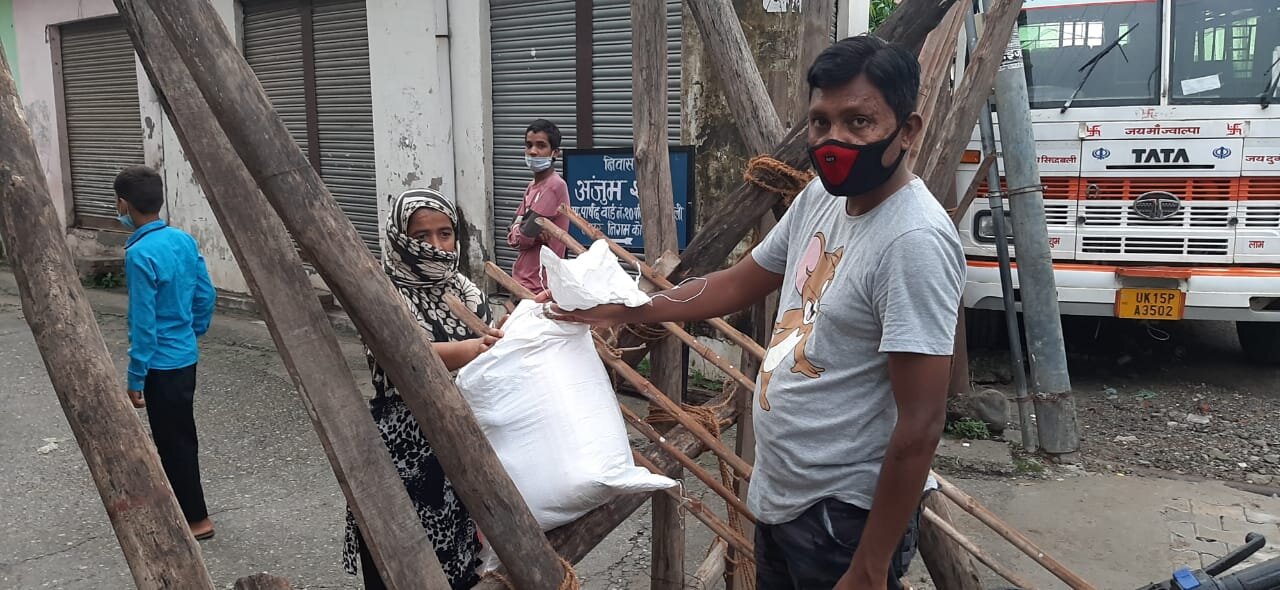
Every week, Project Help continues to provide ration packs to our many very needy families. These ration packs provide essential commodities including of wheat flour, rice, spices, cooking oil, salt etc. We have now been doing this for 8 months and there is no end in sight.

Thank you for your generous help and support

Please do not underestimate the SIGNIFICANT difference that you are making in these people’s lives. Poverty is a cruel and vicious beast. You can make a tax deductible donation simply by clicking one of the DONATE buttons on this website. Thank you.

1000 Hidden Smiles

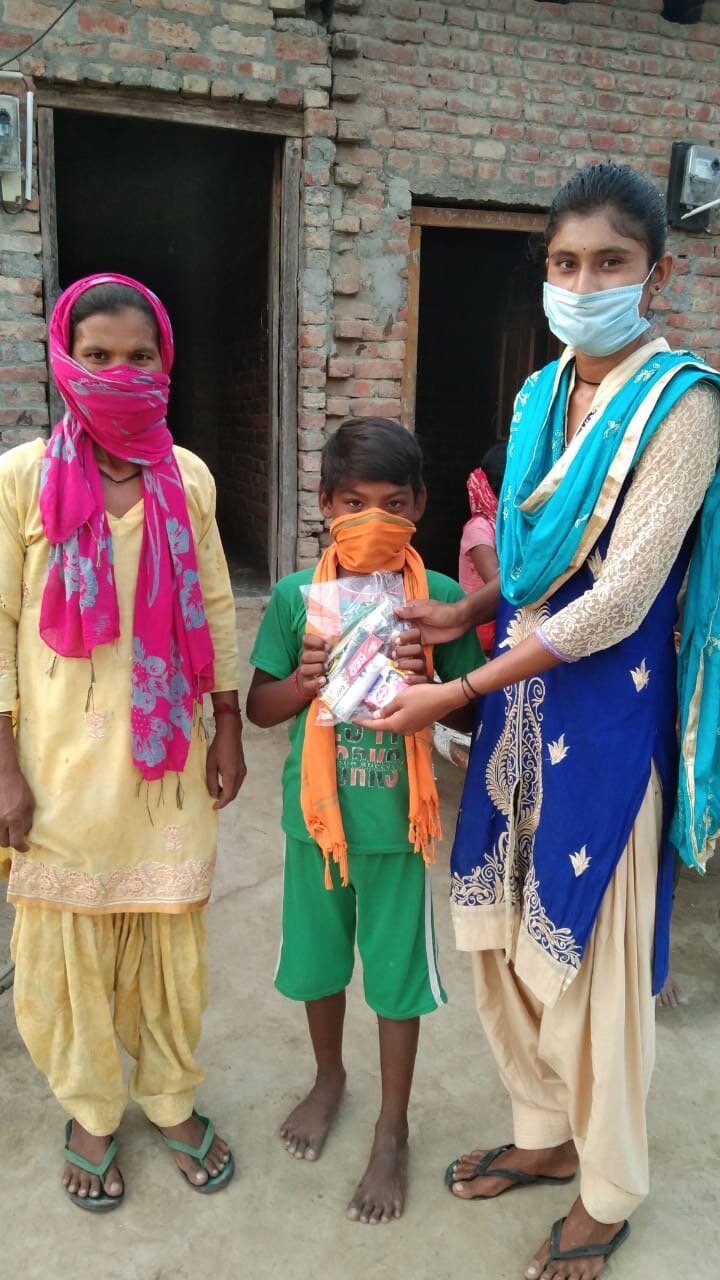
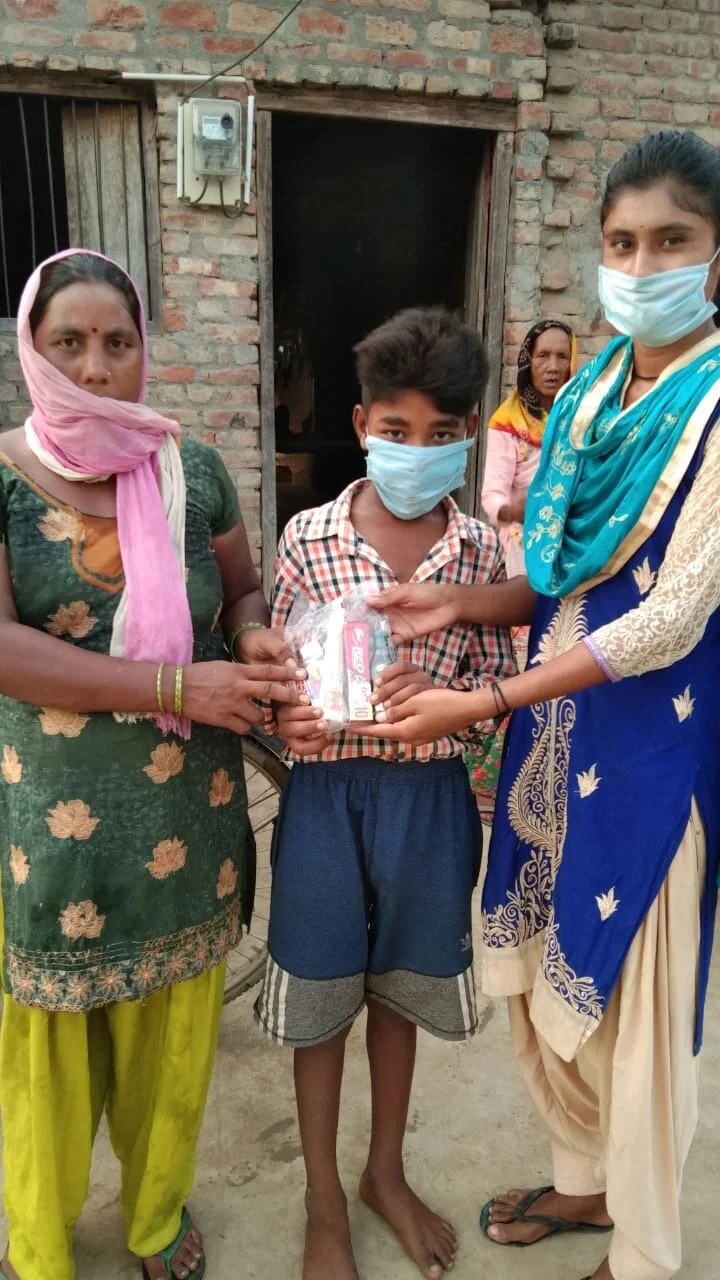
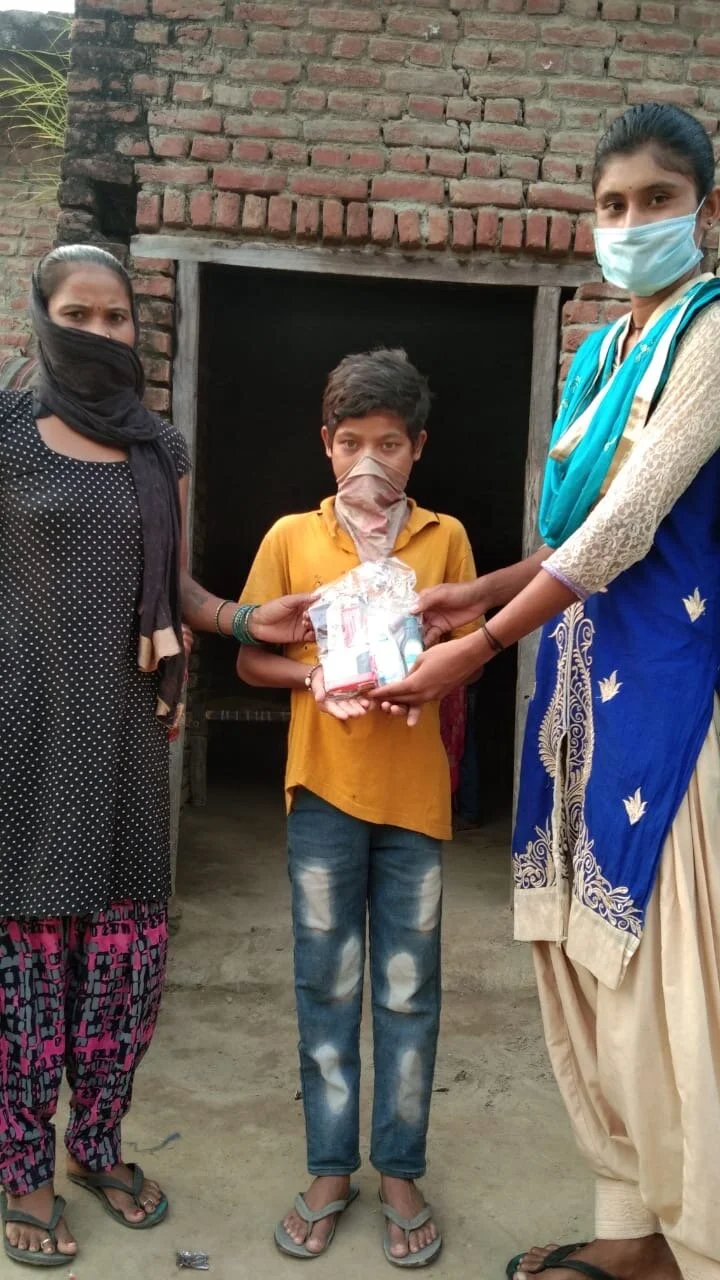
Behind the masks are smiles of gratitude and relief. These photos were taken this week of our team at our three education centres in the Bagnala, Parmawala and Kadarganj jungle villages. Over 1200 ration and hygiene packs have recently been delivered by our team to these villages and slums in Kotdwara.

You may be aware of news this week regarding the seriousness of COVID-19 in India. It’s not looking good. Even with limited accurate and inconsistent data, India could possibly be now, or will soon become, the nation with the highest incidence of COVID-19.

This week’s report from one of our Field Officers gives you a sense of how we are responding to COVID-19 in a remote and very poor part of India. where our mission is to bring love, hope, dignity and purpose to the poor.

This mail is to give you some latest update of Kotdwara. Nowadays in Kotdwara there are many cases of COVID and the infection is at its peak we hope but lots of deaths have occurred. The borders are still partially sealed, people have lost their jobs. The daily wage labours are suffering the most with difficulties. Schools remain closed. Transportation is difficult, public transportation is hard to get with railway and bus service shut for fears of coronavirus spreading. So many neighbourhoods (colonies) are sealed due to coronavirus active cases, so we (Project Help) are the one who is continuously suppling essential food supplies to the families. People are taking care of themselves by doing social distancing, using face masks and sanitizer. Sanitary napkins to the girl child and ladies of the locality have also been distributed.

In this difficult situation only Project Help India is working on ground zero, with supplies of food items, like the ration packs with spices, salt, cooking oil and other necessities. Project Help have now distributed 1200 hygiene packets consisting of hair oil, tooth paste, tooth brushes, sanitizer and hand wash soap. We are taking care of all the basic needs of people in Kotdwara especially for each of our education centre kids. Stationery and work sheets have been distributed to all these kids to keep their education going. Our teaching staff are regularly distributing school work to the students. 

One of our students Nikhil is going through some essential tests prior to his treatment. He is now suffering from minor pain occasionally in his ears. 

Children in all the centres are missing coming to school. They say that life has become more miserable now- a-days due to no income of the family. Many families have nothing, and their savings have been used to date. The only source of food supplies is from Project Help. They are thanking God that they are part of the Project Help family.

We thank our many supporters in Australia and other countries, for being part of the Project Help family too. Wherever we may be, we are connected as a family and your generosity is helping a significant number of people during this most terrible time.

We are passionate about making a difference in the lives of people, families and communities

Desperation, Love and Hope in remote India

Three words, desperation, love and hope are central to the story of being human. At times we may feel like we have nothing left, desperate, with no sense that things can get better …at this point a hand reaches to help and provide, to touch and show that you are loved and there is hope.

At Project Help India we are working incredibly hard to be that hand that reaches to help, intervening with love at times when people are most desperate. Unfortunately, with COVID, too many people are desperate and we just can’t help everyone. This is why we are asking for your continued financial support during these most desperate of days.

It took more than five months for India to reach the bleak milestone of a million cases of the novel coronavirus. The next million came in just 21 days. The third million was faster still: 16 days. The increase in cases is unlikely to ebb any time soon, experts say, as a galloping outbreak spreads to new parts of the country and political leaders continue to reopen the economy. Last week, India recorded the highest one-day jump in new cases – more than 77,000 – anywhere in the world since the pandemic began. The virus has now spread throughout India, the world’s second most populous country, reaching even isolated indigenous tribes. The pandemic has also crippled economic activity – experts believe the economy contracted by 20 per cent in the three months to June – with only faint signs of recovery.

So, what can a small charity like Project Help do in such a huge country? We provide love and hope to desperate people, that’s what we do. We extend our hands to connect with people’s lives, connecting with their story. We show them love by helping them.

Here are three powerful stories from this week;

Project Help has intervened to help a community of people in Chandigarh, in the state of Punjab. Thanks to the generosity of a wonderful family in Sydney, an entire school community of 97 children and 4 teachers have been given a lifeline. Their school has been saved and the children continue to be educated and fed, at a time when their very poor parents who are suffering daily with minimal opportunities for work, are unable to provide for their family.

Happier days before COVID - The new school community that we are supporting at Village Singha Devi, Chandigarh, Punjab. Partnering with the Hope Society.

Happier days before COVID - The new school community that we are supporting at Village Singha Devi, Chandigarh, Punjab. Partnering with the Hope Society.

In Kotdwara we receive calls from desperate people on a daily basis. Due to positive COVID cases, areas within Kotdwara have been completely shut off from the rest of the town. Our Project worker writes about two women who we have recently helped;

This lady is Mrs. Hazrati (below left), she lives in Lakdi Padao that has been sealed since last 24 days. Her husband committed suicide due to the lockdown and depression he was facing due to the loses he faced during this COVID-19. Now this lady goes to other houses to do some domestic chores and get some money but now due to the area seal that is also not possible. So she informed us and Project Help team went to her locality and distributed her the essential food supplies. She broke into tears after receiving the help.

Today Mrs. Urmila (below right)came crying to our office of Project Help asking for some help, she said that they had nothing to eat as her husband have no work and she too, has no earning source. Due to Corona Virus spread people are not allowing the domestic help to come to their house and therefore they have no earnings and hence nothing to eat. Urmila is of 30 yrs. Urmila is wife of Mr. Kishanpal (38 years), he is a daily wage labour. Urmila is mother of 2 children Abhishek (12 years) and Aditya (11 years). Urmila’s life is full of challenges. Her elder son Abhishek is a polio sufferer. He is helpless from his right hand. He is poor in studies too. Urmila says she is ignored by her in laws family because of Abhishek, as her family thinks Abhishek’s condition is a result of some curse. Urmila is living in conditions that could hardly be called liveable. She lives in a dirty slum in a rented single room where there is no proper electricity facility. Urmila is now provided with food supplies and other necessities. She broke into tears after receiving the packets, she was so happy that she started praising Project Help.

When you look closely at our logo, you will see our hand, your hand (thank you), reaching with love and bringing hope to the desperate circumstances of beautiful people.

Let’s never forget that all of this is a two way transaction. We too are blessed when we give and connect with another human …family, friends, neighbours, strangers and those you may never meet in some remote part of India.

Love for today is hope for tomorrow.

Are We Safe Here? - and other very big questions

9 year-old Geetenjali finds the lockdown and the talk of a dangerous disease confusing and incredibly scary.

9 year-old Geetenjali finds the lockdown and the talk of a dangerous disease confusing and incredibly scary.

With its mountain air, rural setting, and with the jungles of the Himalayan foothills in clear view for the first time in memory, Kotdwara locals of all ages are asking big and important questions.

Are we any safer in Kotdwara than in the crowded big cities?

Surely, it’s better here than in the densely overcrowded metropolis of Delhi of 19 million people which is a day’s drive away?

This too is a question the Project Help Team have been considering as the spread of COVID-19 takes its ever ugly and ever firmer grip on the nation of India. And we are also asking;

How is it, that a small school slum-community project has become regarded as an essential part of a major localised COVID-19 pandemic front-line response operation?

If this situation gets worse, as we believe it will, what will be our strategy and do we have the necessary funds and resources to respond to the urgent needs that we see around us?

The questions the kids are asking

For 9 year-old Geetenjali, one of beautiful students at our Disability Centre in the slums, she finds the lockdown and the talk of a dangerous disease confusing and incredibly scary. Why can’t I go to my new school anymore? Where are my new found friends? Why does my teacher now come to my house? Why are there barricades around our slum? Why is daddy at home more and why is he cranky? Why is mummy worrying?

Life is already challenging enough for Geetenjali due to her cognitive disability and the paralysis that has numbed half of her body since birth.

A father’s questions

When you live in poverty, there is so much to be scared about. Geetanjali’s father Mr Hari Shankar, is a daily wage labourer, meaning that he only gets paid on a day to day basis. He fronts up at the marketplace early each morning at 8am waiting for the work he needs to feed his wife and 4 children. These days there is no access to work, because the slum and surrounding areas have been physically barricaded. There are police patrolling the street corners and every exit out of the slum. All of the daily wage workers, the men and women who are domestic workers, rickshaw pullers, auto-rickshaw drivers, the door to door sellers, even the beggars on the main roads, are suffering. Mr Hari Shankar is asking; When can i get back to work? How can I feed my family and who can help me?

You can watch this video, to see men like Hari collect food for his family from the Project Help team. One of our team members wrote…

“But they knew they had someone always for them and that is Project Help, so they called us and asked for some help if we could do anything for them. After getting the message, Mr. Amit Samuel (Founder President Project Help) immediately send his team to the area with food supplies. The team then met with the family members along with police officers and with maintaining social distancing we provided the essential food supplies to the families in need.”

Mr Hari Shankar thanks the Project Help India staff for the relief food packages that he collects from them at the barricades every couple of days.

For Geentenjali, even with the relief packages, she is still hungry. However, she is being provided with lessons and activities by her Project Help teacher which keep her distracted from the constant grumbling of her tummy. She is a talented artist who has discovered new skills and passions since recently starting school at our Centre for the first time in her life. Geetanjali thanks her teacher for learning to draw and make crafts for these have become the greatest joys of her life. (And we are grateful for the donations from Australia that have paid for the stationery, craft resources and teacher’s salary).

So, is it safer in Kotdwara?

Yes, it is somewhat safer because there is less crowding, however, COVID-19 is spreading to the most remote regions of India. We understand that places like Kotdwara, and the remotest of towns and villages even further beyond, are becoming forgotten places of poverty and COVID-19 related suffering. India’s positive cases are reaching 3 million with 60 000+ deaths, and there are growing fears that the virus’s impact on remote village, rural and slum communities could be devastating. The country seems to be entering a dangerous new phase of rising infections in small towns and villages, and the government is underestimating the pandemic and allegedly trying to hide the data.

This is why our work is so important and why children like Geetenjali, and her family needs your urgent help.

Six months ago, before COVID-19 our funds were essentially used to educate 280 kids by providing them with a school and an education. Now things have been taken to a whole new level, with our love and care not only reaching our students but extending to their families as we save many from malnutrition and giving them the dignity and support they need to get through these very uncertain and worrying times.

India’s Invisible Catastrophe

A quote from ‘The Guardian’ 17th August 

‘They will be allowed to die’

Some 600 million Indians live in in rural areas, and fears are rising that they could be overwhelmed by an invisible catastrophe, where many will die without testing or treatment. Data from the National Family Health Survey-4 showed that only about 25% of rural Indians have access to public outpatient (OPD) healthcare..

There are also grave concerns for around 70% of India’s elderly population, who live in villages. Co-morbidities abound and are often left untreated because medical services are far away.

India’s top epidemiologist Jayaprakash Muliyil, who believes up to half of India’s population (670 million people) will get the virus, says that most people with co-morbidities in rural India fail to get treatment.

“This group, and the elderly, are more prone to getting the virus. With limited resources, their families will not rush an elderly person to hospital if they have a fever,” said Muliyil. “They will be allowed to die. That is the reality in rural India where life expectancy is 65.”

Since the deaths will be spread out across huge geographical districts, some as big as 10,000 sq km (London is 1,572 sq km), Muliyil says the real scale of the human tragedy will only emerge much later, if at all.

Virus stigma

Anecdotal evidence also suggests that daily wage labourers will not reveal their symptoms for fear of separation from their families, the stigma, and losing their wages by being quarantined.

“People in the rural areas are hiding their symptoms and are not coming forward to get tested even when the testing van is reaching the village,” said Dr Ravindra Sharma, a senior medical officer in Lakhmipur Kheri district, in India’s most populous state, Uttar Pradesh, which neighbours Uttarakhand.

As we find the answers to so many big and important questions, what we do know is that you are an answer and an integral part of the ongoing solution. Thank you for your help.

Please click the DONATE button on this page to make your tax deductible donation in Australia.