There are many ways a child can be isolated.
For some of the children supported by Project Help India, isolation is geographic. They live in remote jungle villages where distance, poverty and limited resources make access to education extraordinarily difficult.
For others, isolation exists within the boundaries of a city.
Some of the communities we serve in and around Kotdwara are Dalit communities — communities that have experienced generations of social exclusion and discrimination. Although these children may live geographically close to schools, shops and services, poverty and longstanding marginalisation can create barriers that are just as real.
For a child living with a disability, isolation can take yet another form.
In India, children with disabilities can face significant barriers to education, inclusion and participation in community life. When disability intersects with poverty and membership of a historically marginalised Dalit community, a child may face multiple layers of disadvantage, increasing the need for support, advocacy and meaningful inclusion.
This is why our mission places particular emphasis on affirming the value and dignity of every child and every family — especially those living with disability.
We believe no child should be overlooked because of where they were born, the resources their family has, their social background or their disability.
For families with few resources, however, education can easily become something hoped for rather than something a child is able to access consistently.
This is why advocacy matters.
It is why intervention matters.
And it is why simply showing up matters.
Without the advocacy and practical support of Project Help India, many of the children who attend our centres would not be receiving the education and support they need. But our centres offer more than lessons.
A child arrives and is welcomed by name.
A teacher notices when they are struggling.
Someone patiently shows them how to hold a pencil.
Someone celebrates the first word they can read.
A healthy meal is served.
Friendships begin.
Confidence grows.
Slowly, a child who may have experienced life on the margins discovers something powerful:
I am known here. I am cared for here. I belong here.
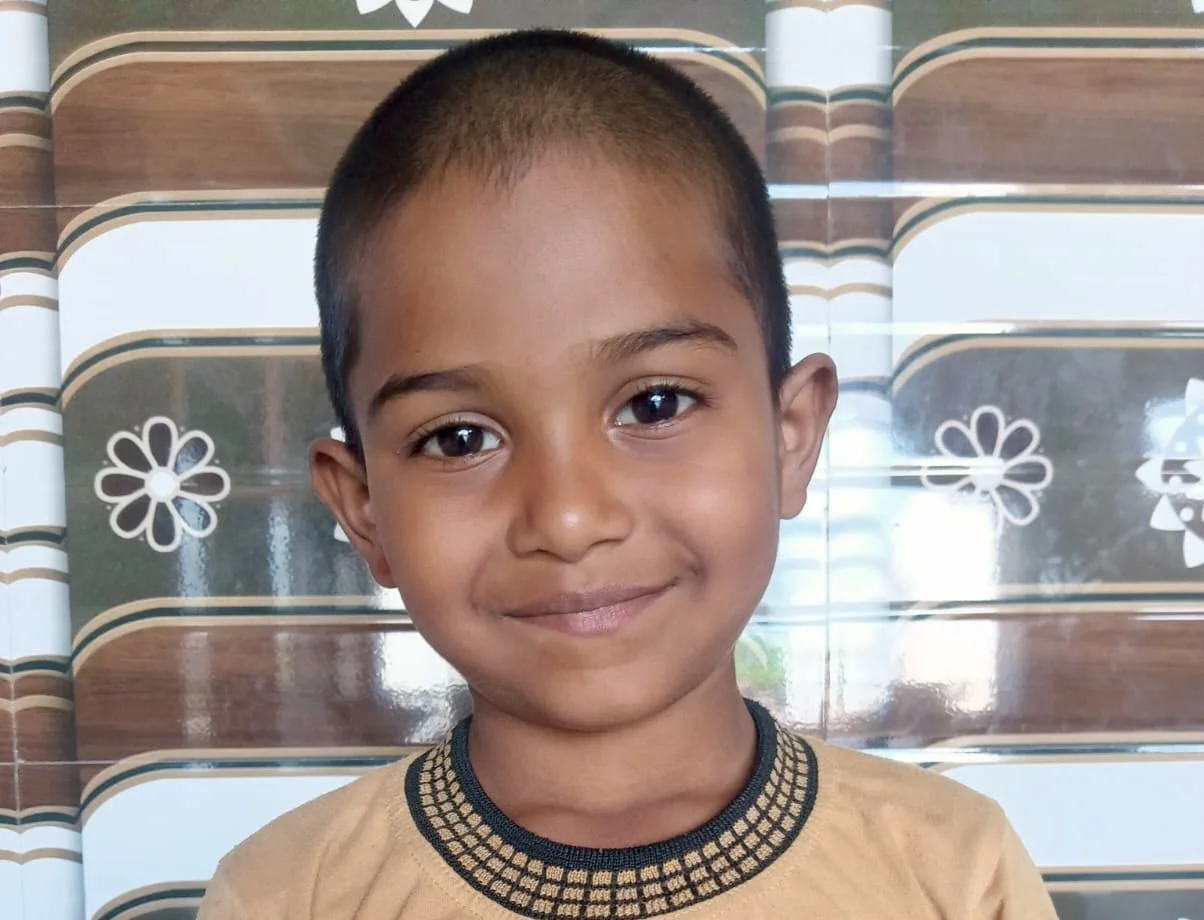
This month, we want to introduce you to five children. Their circumstances are different, but their stories share a common thread: the opportunity to learn, the influence of a dedicated teacher, and the gratitude of parents who are seeing new possibilities emerge for their children.
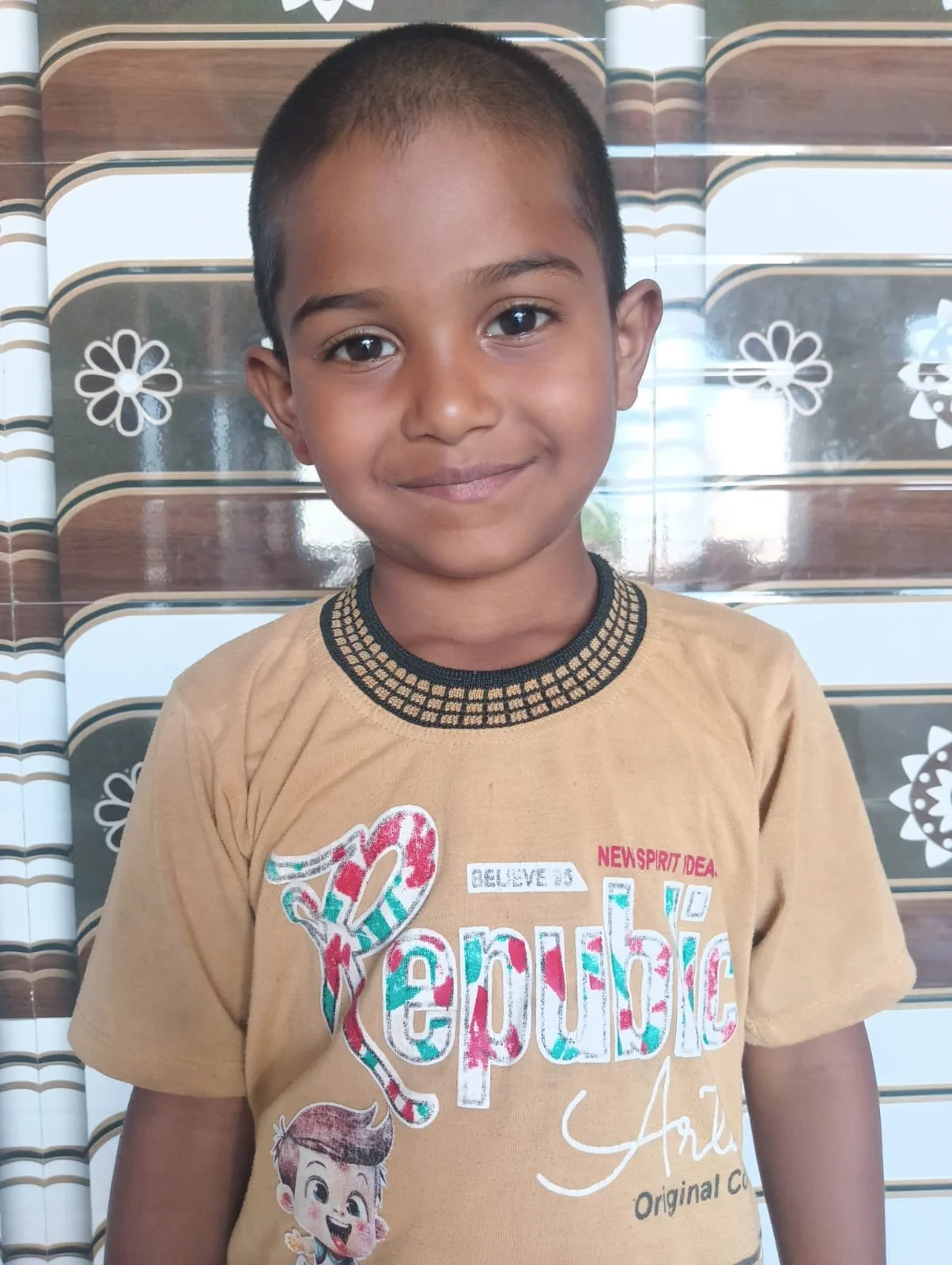
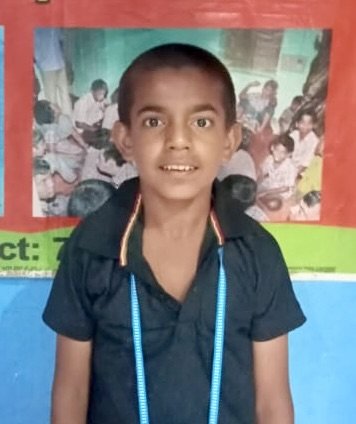
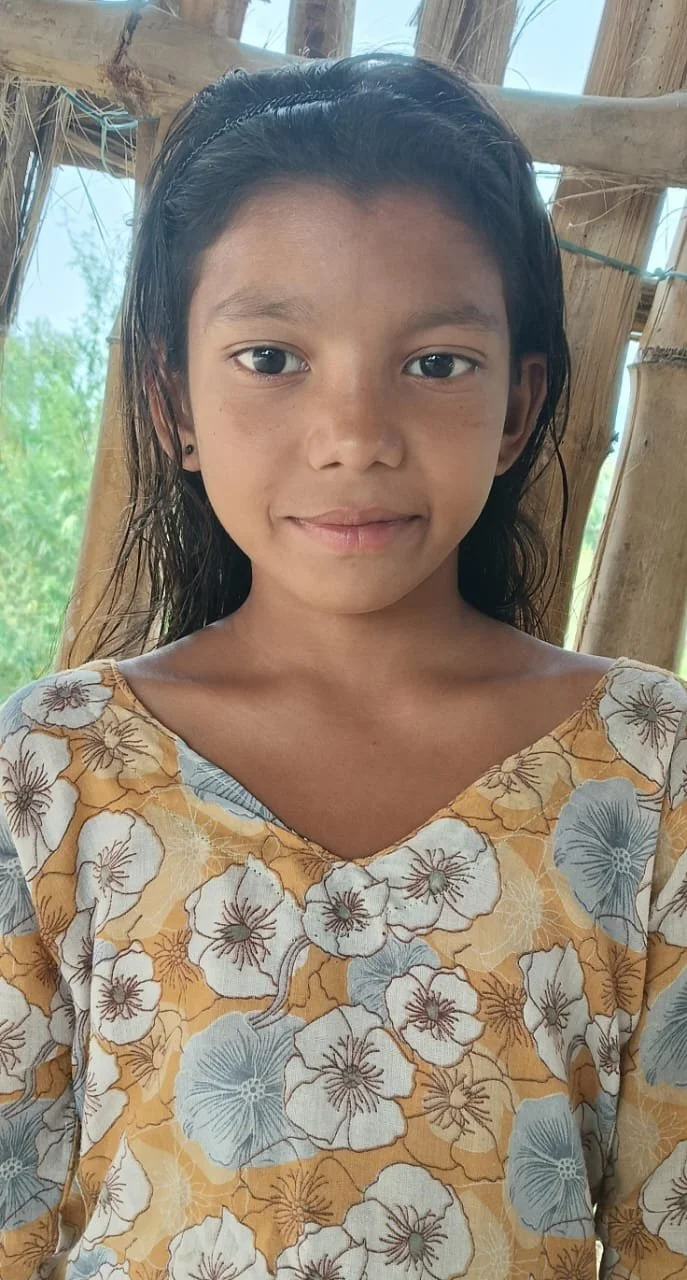
Introducing Junaid
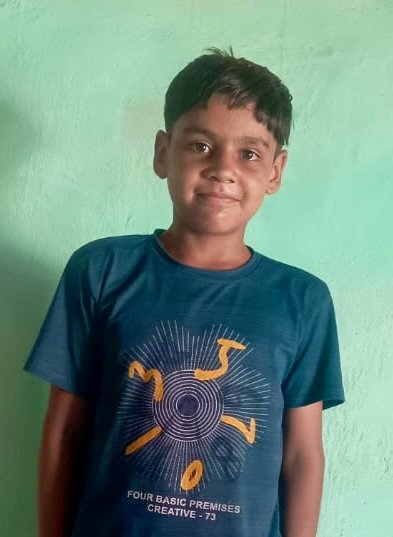
Junaid is nine years old and is growing up in the Gurjar community. He speaks both Hindi and Gujari and began his education through the Project Help India Centre in Kadarganj. His younger sister, Firdaus, also attends the centre.
Junaid’s parents make their living by rearing buffalo and selling milk. Their resources are limited, but their hopes for their children are significant.
Junaid’s family describes a remarkable change since he began attending the centre regularly. In the past, they say, he was often mischievous and did not take care of his cleanliness. Today, he takes pride in being neat and clean, listens to his family and shows greater respect for others.
His uncle has also noticed his educational progress: Junaid can now read and write well and has grown in confidence and maturity.
For his family, these changes are a source of great joy. They are deeply grateful that an education centre exists within their community, giving children like Junaid and Firdaus the opportunity to learn and grow.
Junaid’s story reminds us that education is never only about what happens on a page. When a child is consistently encouraged, guided and valued, that influence can be seen in every part of life.
Introducing Radhika
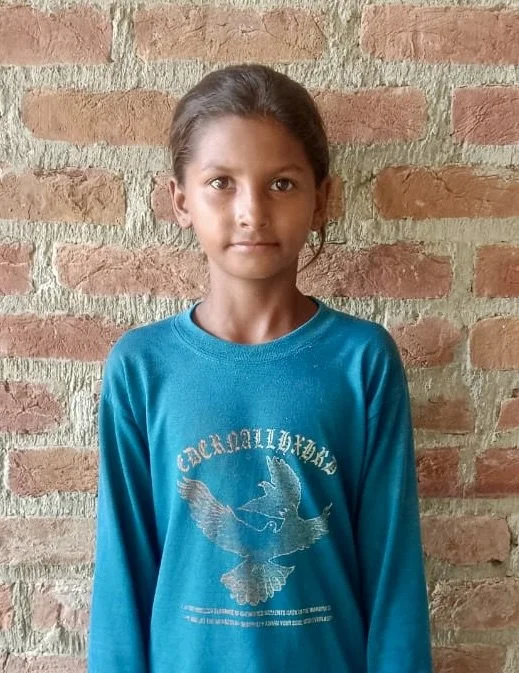
Radhika is ten years old and attends the Project Help India Centre in Puranwala.
She is described as a gentle, well-mannered girl who loves playing and sports. She is one of three children in a family with little formal education.
Before attending the centre, Radhika struggled to read and write. Since joining, she has made significant progress in both. Her family has also noticed positive changes in her personal habits, including greater attention to cleanliness and responsibility.
Radhika’s father rears sheep and goats, while her mother manages the household. Despite their limited resources, her parents want all three of their children to be educated. They hope education will open possibilities that were not available to them.
All three children now study diligently, completing the work given to them at school and at the centre. Their parents are proud and deeply grateful to the teachers and supporters who are helping their children move forward.
Introducing Siddharth
Siddharth is five years old.
His family has lived in the Kashirampur Talla area for approximately 35 years, but they do not have a permanent house. They live in a hut made from plastic sheets, while Siddharth’s father works as a labourer to support the family.
Siddharth joined the Project Help India Slum Centre in Kotdwara on 1 April 2026.
When he first arrived, he did not know how to hold a pencil.
So his teacher began at the beginning.
Hand over hand, patiently and gently, Siddharth was shown how to write.
He is described as a calm child who arrives at the centre clean and on time, and who learns well when something is taught to him. His progress may begin with small steps, but small steps matter enormously when a child has previously had limited access to educational support.
For Siddharth’s parents, the opportunity for their son to receive an education is something they do not take for granted. Their gratitude is heartfelt.
And behind Siddharth’s progress is something we see across all our centres: a teacher willing to be patient enough to help one child take the next step.
Introducing Himanshu
Himanshu is 14 years old and has faced significant physical challenges since birth.
His early development was delayed, and he continues to experience difficulties with mobility and speech. Yet those who know him describe him as sensible, intelligent and eager to learn.
Himanshu was among the children who received education through our Disability Centre from its early days. For a child who required additional support, the centre offered an opportunity to learn in an environment where his needs could be recognised.
His family lives with significant financial pressure. His parents earn their livelihood by running a chaat cart near the Siddhbali Temple in Kotdwara, working long days to support their children.
Today, distance makes it difficult for Himanshu to attend the centre regularly, and he often helps his parents with their work. Yet the relationship with Project Help India remains meaningful to his family.
His parents continue to express deep gratitude for the education, care and practical assistance Himanshu has received.
His story also reminds us why children with disabilities often require a greater level of individual support. At our Disability Centre, higher staff-to-student ratios help us provide the attention and care each student needs.
Every child deserves the opportunity to learn in a way that recognises their individual needs and their inherent worth.
Introducing Madhu
Madhu is 12 years old and studies in Class 5.
As the eldest daughter in a family of five children, she has grown up in difficult circumstances. Her mother works as an agricultural labourer to help meet the family’s daily needs.
Before Madhu began attending the centre, she was not going to school. Her mother also recalls behaviours that concerned the family, including using abusive language and participating in gambling games with other children.
Since joining the centre, Madhu’s life has begun moving in a different direction.
She now attends school.
She comes to the centre every day.
Her mother says she no longer uses abusive language or participates in the harmful behaviours that once worried the family.
And Madhu has discovered things she loves.
She loves to dance and enthusiastically takes part in dance programmes at the centre. She also looks forward to the healthy meals served there, happily returning home to tell her mother what she ate that day.
There is something deeply hopeful in that image: a 12-year-old girl returning home, excited to share the details of her day.
Madhu is not simply attending a programme.
She is participating.
She is learning.
She is discovering joy.
She belongs.
Behind Every Child Is a Teacher Who Shows Up
These five stories are different, but they share something important.
Behind each child is a teacher.
A teacher who notices.
A teacher who encourages.
A teacher who patiently guides a small hand holding a pencil for the first time.
A teacher who sees not only a child’s present circumstances, but also their potential.
Across Project Help India’s 14 centres, approximately 600 students are being supported. We want to recognise and thank the dedicated teachers who show up for these children day after day.
Their influence cannot always be measured in a report.
Sometimes it can be seen in a child who begins to read.
Sometimes in improved confidence.
Sometimes in a parent noticing that their child has changed.
Sometimes in a girl discovering that she loves to dance.
And sometimes in a child simply beginning to believe:
There is a place for me.
You Are Part of These Stories
We also want to thank every person who supports Project Help India.
These stories are possible because people choose to care — and then turn that care into action.
Approximately $50 per month can help provide a child with education and a healthy daily meal. Supporting students at our Disability Centre costs a little more because a higher staff-to-student ratio is needed to provide appropriate individual care and support.
Your financial support helps create places where children facing poverty, geographic isolation, disability and social marginalisation can learn and grow.
You can make a tax-deductible donation by clicking the pink DONATE button at the top of this page.
But perhaps the impact can be expressed even more simply.
You help a child be known.
You help a child be cared for.
You help a child belong.
And you help a child begin to imagine a different future.
Thank you for standing with these children, their families and their teachers.
Thank you for believing that where a child begins should not determine where their story can go.
Thank you for showing up.