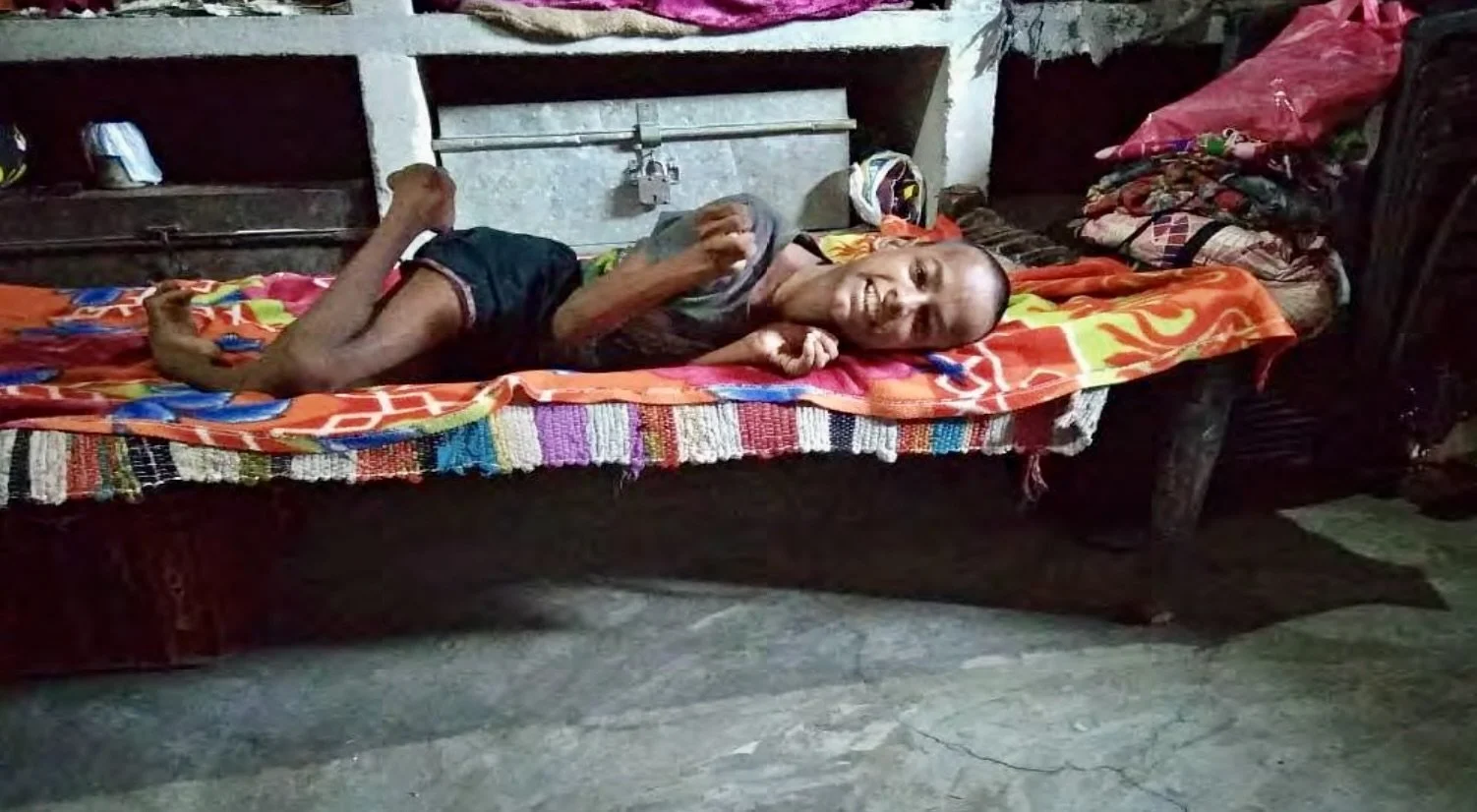
Suhail - here he is at about 15 years of age. Back then he was carried to school most days by his father.
There is something unforgettable about Suhail’s smile
Even after years of physical suffering, exclusion, isolation, and disappointment, he still lights up whenever visitors arrive at his home. He loves conversation, friendship, laughter, and simply being included.
And yet, for much of his life, Suhail has been largely forgotten by the world around him.
Suhail is 20 years old and lives with his family in a small two-room home in a slum community near the riverbank in Kotdwara, North India. His father sells fruit to support the family on a very modest income, while his mother has spent most of her life caring for Suhail full-time.
He is the youngest of eight children.
Suhail belongs to a Muslim family, and over the past decade it has been a profound privilege for our Project Help India team, as Christians, to walk alongside this family through friendship, practical care, advocacy, consistency, and love.
What began as disability support slowly became something much deeper:
relationship,
trust,
and belonging.
A Child, and a family, failed by the system
Suhail was not born with a disability.
As an infant he became critically ill with jaundice and later underwent intestinal surgery. Over time his body weakened significantly. His arms and legs became severely twisted, his back weakened, and eventually he lost the ability to sit, stand, or walk independently.
Today, he remains bedridden and housebound.
He also struggles to speak clearly, making communication difficult for people who do not know him well.
But perhaps one of the hardest parts of Suhail’s story has not been his disability itself.
It has been exclusion.
For many years, local schools refused to accept him because of his condition. Despite wanting desperately to learn and be included, Suhail was repeatedly denied access to education simply because he was considered “too difficult.”
In communities where disability is still deeply misunderstood, families can face painful stigma and isolation.
Some parents are blamed.
Some are shamed.
Some are treated as though disability is a punishment for past sins.
The loneliness carried by parents — especially mothers — can be enormous.
Alongside the emotional burden comes the financial reality:
medical costs,
reduced work opportunities,
ongoing care needs,
transport difficulties,
and little or no government support.
For many families, it becomes a life lived largely behind closed doors.
The Right to Education. The Right to Belong.
When Project Help India first connected with Suhail’s family more than 10 years ago through our Disability Centre ministry, one thing became immediately clear:
Suhail desperately wanted connection.
Because he could not attend school normally, our teachers began visiting him at home regularly. Some days staff would transport him to activities at the Disability Centre when possible. Other days they would simply sit with him at home — helping with basic learning activities, exercises, conversation, encouragement, and companionship.
Over time, those visits became life-changing.
For Suhail, Project Help India became his school.
His social world.
His community.
His connection to the outside world.
And in many ways, he may remain a lifelong student member of our Disability Centre unless ongoing advocacy can eventually help create opportunities for some form of meaningful supported employment or long-term community participation in the future.
That matters deeply.
Because every person — regardless of disability — deserves dignity, purpose, belonging, education, and the opportunity to participate in society.
Advocacy for the Most Marginalised
Suhail’s story is not isolated.
Across North India, there are still many children living with disability who remain hidden, excluded, or denied access to education and support.
Part of Project Help India’s growing advocacy work now involves actively identifying vulnerable children with disabilities who are being overlooked or discriminated against because of their condition.
In some cases, families are simply unaware of what support may exist.
In other situations, schools refuse enrolment.
And sometimes government systems become almost impossible to navigate for families living in extreme poverty.
One ongoing frustration has been Suhail’s repeated inability to access even a basic disability pension.
Although disability support technically exists, Suhail has continually been denied access because he cannot physically attend government offices and his fingers are too deformed to complete the biometric identification process required for registration.
It is heartbreaking.
And it is why advocacy matters.
Not simply charity.
Not pity.
But human dignity and human rights.
The right to education.
The right to be seen.
The right to belong.
The right to hope.
Love Still Finds a Way
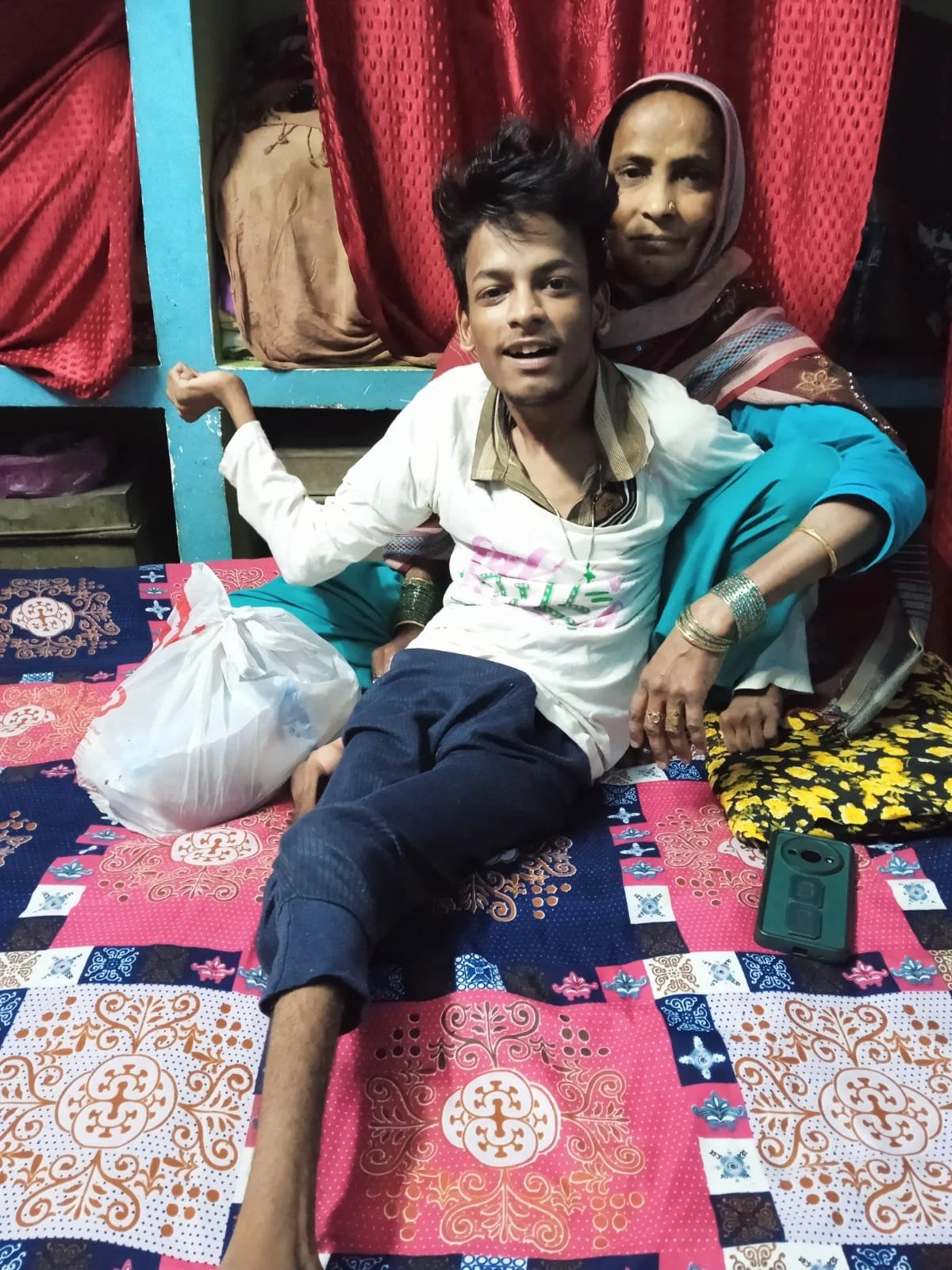
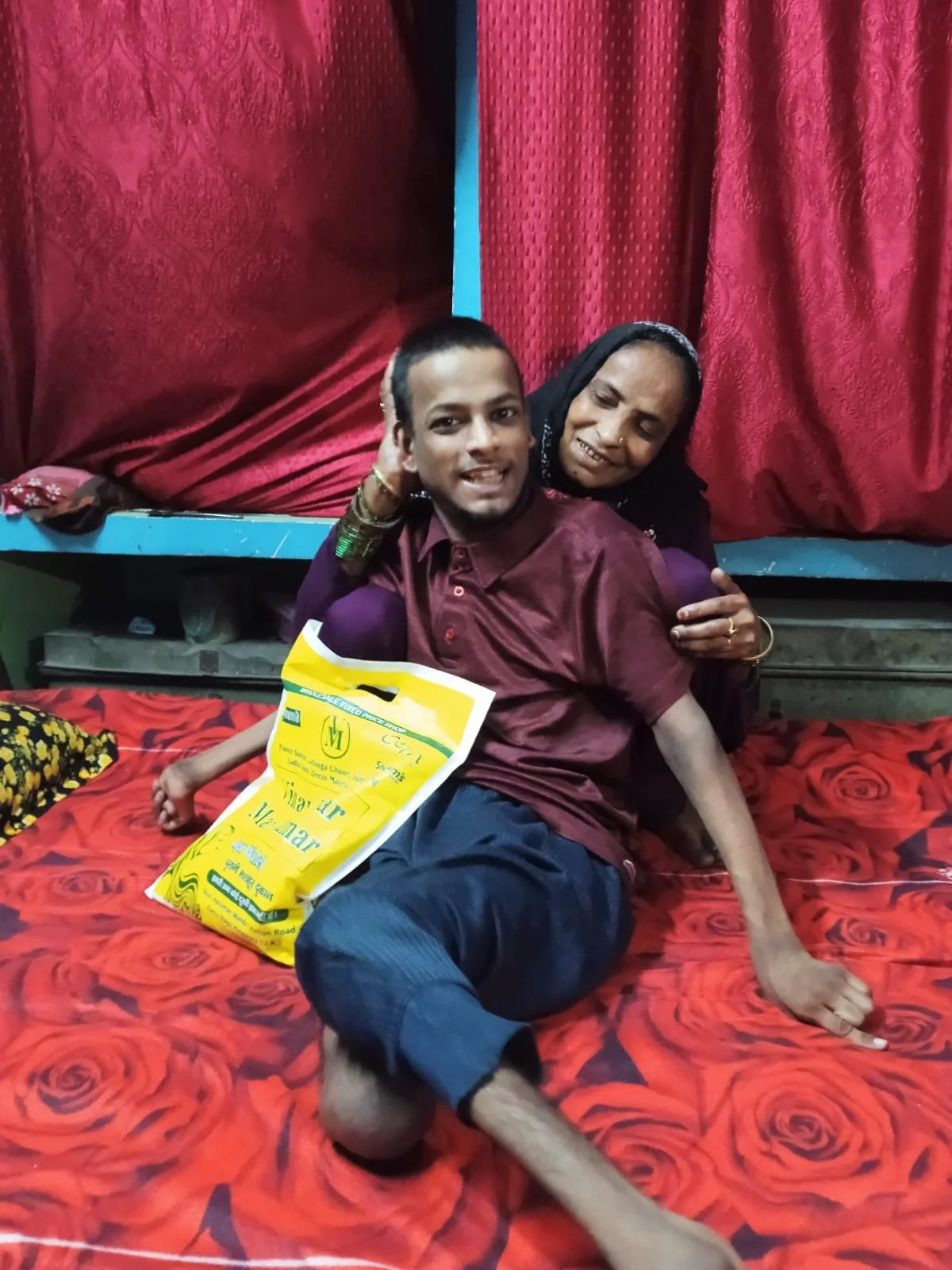
Recently, one of our teachers visited Suhail’s home carrying a small Mothers’ Day gift for him to give to his mum.
Earlier in the year, the family also received an Eid gift package through Project Help India.
Simple moments.
Simple gestures.
But for families living in ongoing isolation and hardship, these moments matter enormously.
They communicate something powerful:
You are not forgotten.
Despite everything he has faced, Suhail continues to smile constantly. There is warmth in him. Joy. Gentleness. A love of life that somehow continues shining through enormous hardship.
And beside him, always, is his mother — carrying both exhaustion and extraordinary love.
A Future Still Worth Fighting For
Suhail’s story reminds us why Project Help India continues showing up.
Not only in classrooms and villages.
But also in hidden homes,
forgotten communities,
and among families carrying invisible burdens.
There is still much work to do.
More advocacy.
More support.
More opportunities.
More awareness.
More inclusion.
But we remain deeply hopeful.
Because every child matters.
Every family matters.
And every person deserves to know they are seen, valued, loved, and not alone.
Our hearts are filled with gratitude for the generous Australian family who has now committed to supporting Suhail and his family over the next 12 months.
Their kindness will help provide ongoing care, advocacy, educational support, practical assistance, and continued connection for a young man whose life has too often been marked by exclusion.
Thank you for helping us continue showing up where it matters most.